
Class Support Plan
What if developing pupils' Life Readiness was not only something we did for individual children, but something pupils could help one another to achieve?
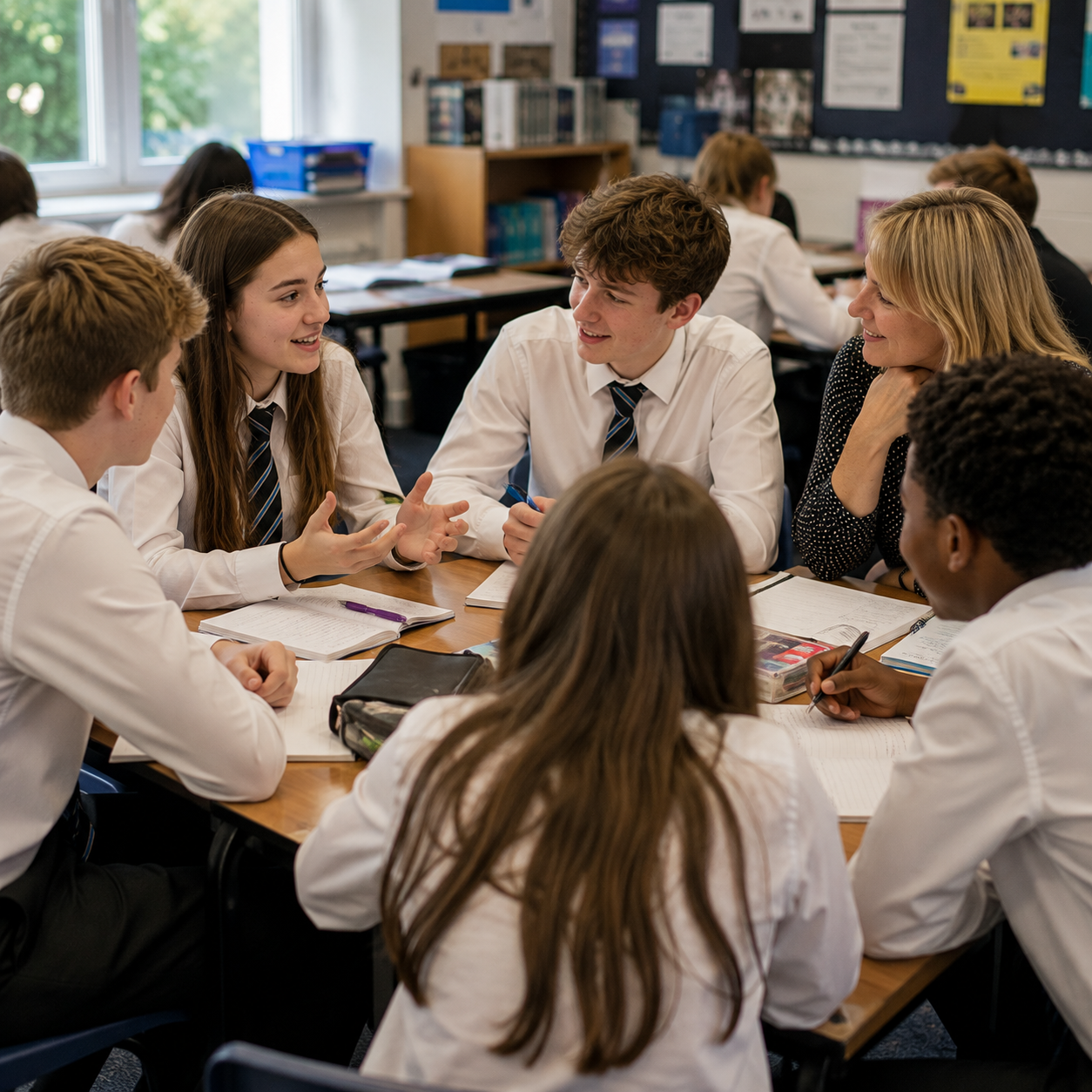
A class is more than a collection of individual pupils. Every day, children influence one another: through the relationships they build, the empathy they show, the way they respond when someone is struggling, how they manage disagreement, whether they ask for and offer help, and whether they encourage one another to succeed.
This creates an opportunity.
By developing Life Readiness collectively, we can help individual pupils become better equipped to manage themselves, relate positively to others and respond to life's challenges. But as those individual capabilities develop, they can also become a resource for everyone else in the class.
A pupil who becomes more empathetic contributes to a more empathetic class. A pupil who becomes better at offering help makes help more available to others. Pupils who develop stronger relationship and problem-solving skills contribute to a group that is better able to manage difficulties together.
The longer-term ambition is therefore not simply a class of more Life Ready individuals. It is a stronger, more Life Ready class: one in which pupils increasingly recognise that their own development can contribute to the development of others, and where pupils not only want to do well themselves, but want each other to do well too.
This is the thinking behind the Class Support Plan (CSP).
The Life Readiness Questionnaire (LRQ) helps form tutors understand the strengths and support needs within their tutor group. The CSP turns that insight into a collaborative process in which tutors and pupils identify what their class could become better at, decide what might help, work on those priorities together and consider what has changed.
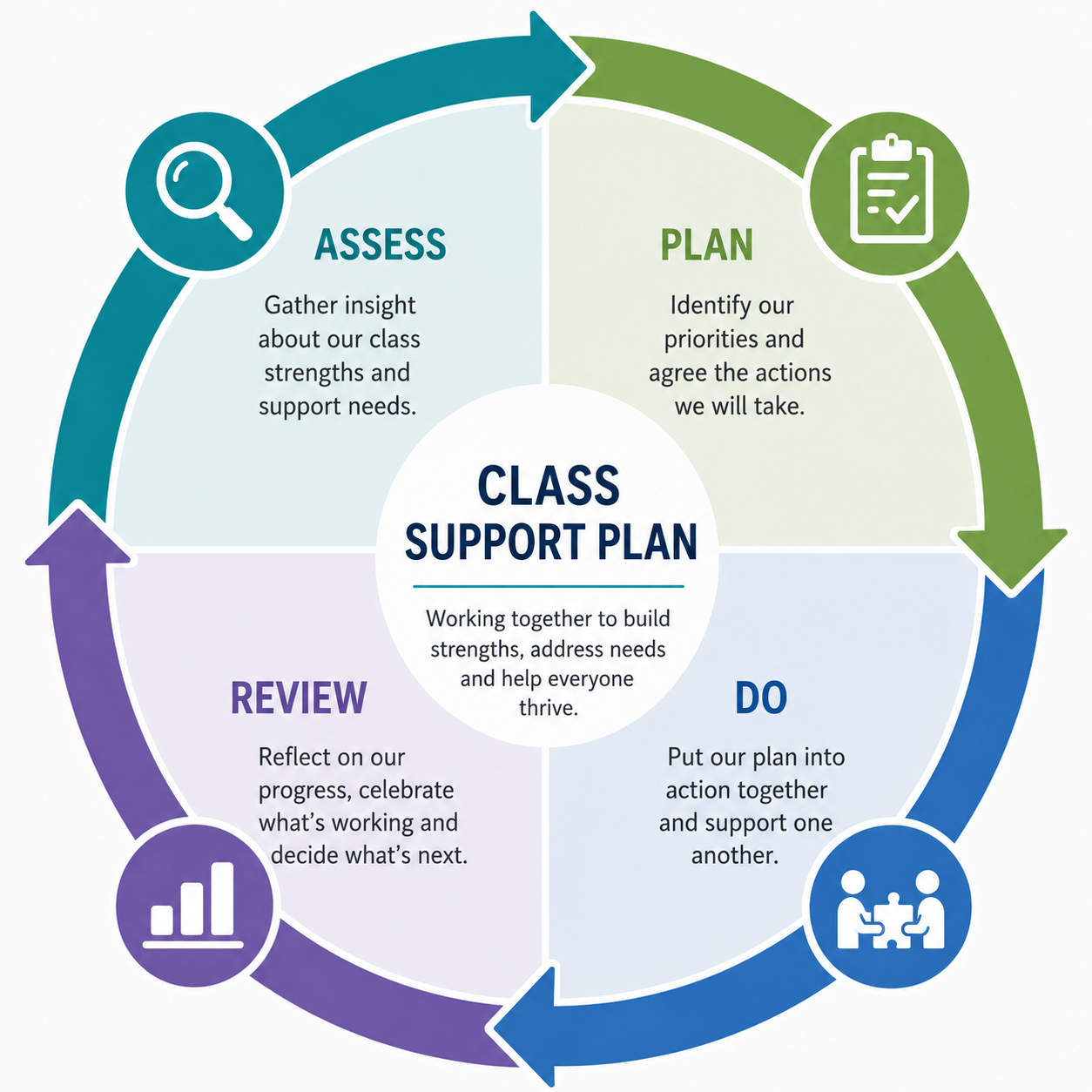
At its simplest, the Class Support Plan asks four questions:
ASSESS: What do we already know, and what have we learned about our class?
PLAN: What would we like to improve, and what could help?
DO: What are we going to do together?
REVIEW: Do we think things have improved, and what should happen next?
But the ambition behind those four questions goes much further than completing an assessment and responding to its findings. It is about helping pupils develop with and through one another, building individual capability, collective strength and, ultimately, a growing sense of shared responsibility and class solidarity.
Supporting pupils without identifying pupils
One of the important principles behind the Class Support Plan is that it focuses on the class as a whole.
Imagine, for example, that the LRQ indicates that Seeking and Accepting Help is an important area for a particular tutor group.
There may be individual pupils within that class who find asking for help particularly difficult. But supporting them does not necessarily require identifying those pupils or asking them to disclose that difficulty.
Instead, the class can consider a collective goal:
“We want everyone in our class to feel confident recognising when they need help and knowing how to ask for it.”
The tutor and pupils can then consider what might help the class become better at this together.
Pupils who particularly need support can participate in and benefit from the activities without being singled out or labelled as needing additional help.
This changes the conversation.
Rather than asking “Which pupils have a weakness?”, the CSP asks:
“What could we, as a class, become better at together?”
From support being done to pupils to something developed with them
Pupil participation is central to the Class Support Plan.
The LRQ provides one source of insight. The form tutor also brings their own developing knowledge of the class and, where available, information from previous Class Support Plans.
But pupils themselves also have an important contribution to make.
The main findings can be shared with the class in a positive and constructive way. Pupils can consider whether the findings make sense to them, which areas they think would be useful to work on and what they think might help.
This gives pupils a genuine role in shaping the support they receive.
Instead of an intervention simply being delivered to a class, the tutor and pupils can work together to decide:
- what they would like their class to become better at;
- what they could do to help achieve that;
- how they can contribute themselves; and
- later, whether they think things have improved.
This is an important distinction.
Pupils are not simply recipients of support. They become participants in the development of their class.
Building on strengths as well as responding to needs
The LRQ does not only identify areas where support may be valuable. It can also help tutors recognise the existing strengths within their class.
Those strengths matter because they may themselves become part of the solution.
For example, a class might show relatively strong empathy but be less confident with emotional expression.
Rather than treating those as two unrelated findings, the tutor might consider whether the empathy pupils already show towards other people could help create an environment in which pupils feel more comfortable expressing their own feelings.
This creates a more positive starting point for the Class Support Plan.
The question is not simply:
“Where are our weaknesses?”
It is also:
“What are we already good at, and can those strengths help us develop further?”
Learning with and from one another
There is an interesting parallel between the thinking behind Class Support Plans and the well-established educational approach of collaborative learning.
Collaborative learning recognises that pupils do not always learn most effectively in isolation. The Education Endowment Foundation (EEF) describes collaborative learning as pupils working together on learning activities or tasks, either contributing towards a common outcome or working together on a shared task. Its review of the evidence finds a positive impact on learning in both primary and secondary schools.
But particularly interesting for Class Support Plans is the idea of positive interdependence.
Research into cooperative learning has described successful collaboration as creating opportunities for pupils to “promote each other's success” by helping, supporting and encouraging one another.
In other words, successful collaboration is not simply about pupils sitting together or completing the same activity. It can create a situation in which pupils have an interest in other pupils succeeding as well as themselves.
We can sometimes see the importance of this reflected in descriptions of successful school cultures. An Ofsted report on Yardley Primary School, for example, described pupils as:
“keen to learn... and want each other to succeed in their learning.”
Sutton High School similarly describes its students as those who “learn with joy and want each other to succeed.”
There is something powerful in that idea.
A strong class is not simply one in which pupils want to do well. It is one in which pupils increasingly want each other to do well.
Applying the same principle to Life Readiness
Class Support Plans take a similar principle and apply it beyond academic learning to the development of Life Readiness.
If a class is working on empathy, belonging, relationships, emotional expression, resilience or seeking and accepting help, the development of one pupil can contribute to the experience and development of others.
A pupil who becomes more empathetic does not benefit alone; other pupils experience that empathy.
A pupil who becomes more willing to offer help contributes to a class in which others may find it easier to seek and receive help.
A pupil who develops stronger relationship skills contributes not only to their own relationships, but to the quality of the relationships experienced by the pupils around them.
In this sense, Life Readiness can become a collective resource within the class.
The aim is therefore not simply for each pupil to become more capable individually. It is to create an environment in which pupils increasingly use those capabilities to contribute to one another's development.
That brings us towards one of the longer-term ambitions of the Class Support Plan: developing a sense of shared responsibility and class solidarity.
Assess → Plan → Do → Review
1. Assess: Understand the class
The starting point is to bring together what is already known about the class.
Where a previous Class Support Plan exists, this provides useful context. What strengths and priorities were identified previously? What did the class choose to work on? What support was provided? What did pupils and their tutor think had improved? Was anything recommended for the following year?
The current LRQ findings can then add a new source of insight.
The tutor can consider the areas identified as priorities, the relative strengths within the class, how the group compares with the wider year group and whether anything in the findings is surprising or confirms what they have already observed.
The CSP therefore does not ask a tutor to replace their professional judgement with questionnaire results.
Instead, it brings different sources of understanding together:
- what has previously been learned about the class;
- what the current LRQ tells us;
- what the form tutor has observed; and
- what pupils themselves think.
2. Plan: Decide what the class would like to improve
A class does not need to address everything at once.
The tutor and pupils can identify a small number of areas where they think development would be particularly valuable.
Importantly, the aim does not need to be expressed as an arbitrary numerical target.
For example, rather than setting a target to increase a questionnaire score by a particular number of points, the class might agree:
“We would like everyone in the class to become more confident asking for help when they need it.”
Or:
“We would like to strengthen the sense that everyone belongs and has a place within our class.”
The focus is on the direction of improvement: what would we like our class to become better at?
The next question is practical: what might help?
That could include tutor-time activities, discussions, opportunities to practise particular skills, peer activities, changes to routines, PSHE resources or support that already exists within the school.
And pupils themselves may have valuable ideas about what could make a difference.
3. Do: Put the plan into practice
The CSP should then become part of the normal work of the tutor group rather than a document that is completed and forgotten.
Support does not necessarily require a new programme or formal intervention.
Sometimes relatively small changes can matter: creating more opportunities for discussion, changing a routine, practising how to ask for help, encouraging pupils to recognise each other's strengths or providing opportunities for pupils to support one another.
The class can return to its priorities periodically and ask:
- How do we think things are going?
- Is what we are doing helping?
- Has anything changed?
- Is there something we could do differently?
This keeps the Class Support Plan alive and reinforces the idea that improvement is something the class is working towards together.
4. Review: Has anything improved?
Reviewing the Class Support Plan is not about having to demonstrate that every questionnaire score has increased or proving that an intervention has “worked”.
Children's experiences and needs change, and many of the influences upon them sit outside the school's control.
A more useful question is:
“Have we made progress in the areas we agreed to work on?”
There are several perspectives that can help answer that question.
The pupils' view: Does the class think things have improved?
The tutor's view: What has the tutor noticed? Have behaviours, conversations or interactions changed?
Other teachers' observations: In secondary schools, pupils spend much of their day outside their tutor group, providing opportunities to apply their Life Readiness capabilities in different subjects, situations and groups of pupils. Where existing feedback systems allow subject teachers or other staff to share observations with form tutors, these can provide another valuable perspective. Positive feedback as well as concerns may provide evidence of pupils listening to and supporting others, managing disagreement or frustration, solving problems together, seeking and offering help or contributing positively to collaborative learning.
The LRQ evidence: Where the questionnaire has been repeated, have the class results changed? Are the same areas still priorities or have different needs emerged?
These different sources of evidence do not have to agree completely.
If pupils think something has improved but the questionnaire has changed very little, or the tutor sees something differently from the pupils, that does not make the review unsuccessful. The difference itself may provide useful information and something worth discussing.
Building individual capability and class solidarity
The longer-term ambition of the Class Support Plan is not simply to improve a series of questionnaire scores.
It is to help pupils develop the capabilities they need to manage themselves, relate positively to other people and respond more effectively to the challenges they encounter.
But these capabilities do not only benefit the individual pupil.
A pupil who develops greater empathy contributes to a class in which other pupils feel better understood. A pupil who becomes more willing to offer help contributes to an environment in which others may find it easier to seek and receive support. A pupil who develops stronger relationship skills contributes to the quality of relationships across the group.
As individual capabilities develop, they can therefore become part of the collective strength of the class.
This is where the idea of class solidarity becomes important.
By involving pupils in understanding their class, deciding what they would like to improve, contributing to activities and reviewing what has changed, the CSP can help develop a growing sense of shared responsibility.
Pupils can begin to recognise that they have a role not only in their own development, but in helping to create the kind of class they want to belong to.
A strong class is not simply one in which pupils want to do well themselves. It is one in which pupils increasingly want each other to do well, and are developing the capabilities to help make that happen.
Over time, this can help create a class that is more supportive, more inclusive and better able to respond to difficulties together.
And these capabilities do not remain within the tutor group. They can also be taken into the many different groups in which pupils learn throughout the school day.
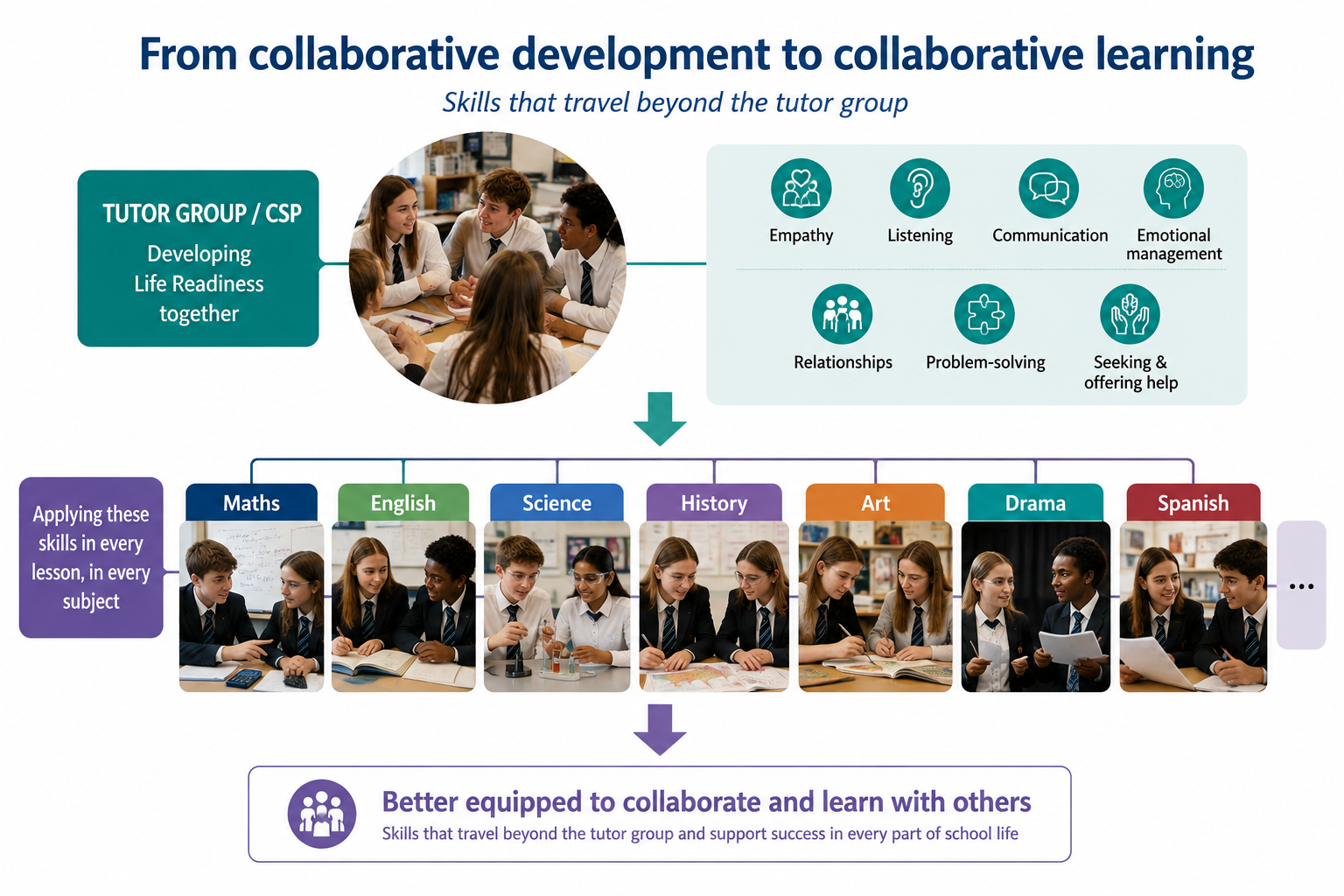
From collaborative development to collaborative learning
Skills that travel beyond the tutor group
This may be particularly important in secondary schools.
The Class Support Plan is developed within the tutor group. This provides a relatively stable community in which pupils can work together on their Life Readiness: developing capabilities such as empathy, emotional understanding, positive relationships, emotional management, problem-solving and seeking and offering help.
But pupils do not leave those capabilities behind when tutor time ends.
Throughout the school day they move into Maths, English, Science, History, Art, Drama, languages and other subjects, often joining classes made up of pupils from several different tutor groups. In many of those lessons they will be expected to work collaboratively with other pupils.
Collaborative learning is a well-established educational approach, but successful collaboration requires considerably more than simply putting pupils together in groups.
“Collaborative group work can be highly effective, but it can also be difficult to do well.”
Ofsted
The Education Endowment Foundation (EEF) makes a similar point, noting that pupils need “support and practice to work together; it does not happen automatically.”
Research with secondary-school pupils also highlights the importance of communication, interaction and the management of emotions within successful collaborative learning.
Many of the capabilities pupils develop through Life Readiness are also capabilities that can help them participate effectively when learning with other people:
- listening to and understanding another person's perspective;
- communicating their own ideas;
- responding constructively to other people's ideas;
- managing disagreement, frustration and disappointment;
- developing and maintaining positive relationships;
- working flexibly with others to solve problems;
- recognising when they need help and being willing to ask for it;
- recognising when somebody else needs help and being willing to offer it; and
- believing that their own contribution can make a difference to the group.
These abilities have a striking overlap with many of the capabilities pupils are developing through Life Readiness.
A pupil developing these capabilities within their tutor group is therefore developing skills they can take with them into every other classroom.
And the relationship may work in both directions. Collaborative activities provide opportunities for pupils to practise capabilities such as communication, empathy, problem-solving and emotional management. Developing those capabilities, in turn, can help pupils become better equipped to participate successfully in collaborative learning.
A virtuous circle
This creates the possibility of a virtuous circle: collaborative development of Life Readiness can help pupils become better equipped to collaborate, while effective collaboration provides further opportunities to apply, practise and strengthen those same capabilities.
Pupils learning how to help one another develop may also become better equipped to help one another learn.
In a secondary school, the potential benefit therefore extends beyond any single tutor group. Pupils can take the capabilities they develop within their form into the different groups in which they learn throughout the school day, contributing to effective collaboration with pupils from across their year group.
A continuing journey through school
The Class Support Plan is not intended to be a one-off exercise.
At the end of each cycle, the tutor and pupils can record what they have learned, what appeared to help, which strengths should continue to be developed and where further support may be valuable.
Those recommendations can then provide part of the starting point for the following year's form tutor.
This means the new tutor does not have to begin with only a snapshot of a class they are still getting to know.
They inherit a developing picture of the group: its strengths, the areas pupils have found more difficult, what they have previously chosen to work on, what support has been provided and what pupils and tutors believe has helped.
The cycle can then begin again:
Previous Plan → Assess → Plan → Do → Review → Recommendations → Next Year's Plan
Over successive years, Class Support Plans can therefore create something schools rarely have: a continuing record of the development of a class as a group.
From their first year at school to their last, schools can see not only changing areas of need, but the strengths that have emerged, the capacities pupils have developed and the ways in which the class itself has become stronger.
Turning insight into action
The LRQ can help a school understand where strengths and support needs exist.
The Class Support Plan answers the next and arguably more important question:
What are we going to do with that understanding?
By combining questionnaire evidence with the knowledge of the form tutor and the contribution of pupils themselves, the CSP provides a practical bridge between assessment and support.
It turns insight into action, action into an opportunity for review, and each review into a better understanding of what the class may need next.
Most importantly, it gives pupils an opportunity to become active participants in that process: developing their own capabilities while contributing to the continuing development of the class around them.
Further reading and evidence
The ideas discussed in this article draw on established research and practice around collaborative and cooperative learning. The following provide useful further reading:
- Education Endowment Foundation (EEF) – Collaborative learning approaches
The EEF Teaching and Learning Toolkit summarises evidence on collaborative learning in primary and secondary schools. It highlights the importance of shared goals and notes that pupils need support and practice to work together effectively.
EEF: Collaborative learning approaches - Ofsted – Collaborative group work
In discussing the evidence informing the Education Inspection Framework, Ofsted acknowledges the potential value of collaborative learning while also highlighting the challenge of doing it effectively: “Collaborative group work can be highly effective, but it can also be difficult to do well.”
Ofsted: Developing the education inspection framework – how we used cognitive load theory - Education Endowment Foundation – Collaborative learning and the development of wider skills
A recent EEF article describes the use of collaborative learning to develop confidence, teamwork and problem-solving alongside learning, illustrating how collaboration can provide opportunities to practise capabilities that extend beyond subject knowledge.
EEF: Collaborative learning – helping to prepare students for industry - Education Endowment Foundation – Creating a community of collaborative learners
This EEF resource explores the relationship between collaborative activity, shared goals and the development of self-regulation and executive function in younger children.
EEF: Creating a community of collaborative learners - Sutton High School – Wanting each other to succeed
Sutton High School describes a culture in which students support one another and says it is proud to have students who “want each other to succeed.” This provides a useful real-world example of the kind of shared attitude and class solidarity discussed in this article.
Sutton High School: Why us?